Mid-Engine Mastery: Why?

Liam Reilly
| 29-06-2026
 · Vehicle Team
Hello, Lykkers! Walk through any supercar lineup and you will notice a common theme: the engine sits right behind the seats, not in the front or over the rear axle.
This layout, known as mid-engine (or rear mid-engine, rear-wheel drive), dominates high performance machines from Ferrari to McLaren. Why do engineers go through the trouble of placing a heavy block so far back?
The answer lies in two words: weight distribution and handling dynamics.
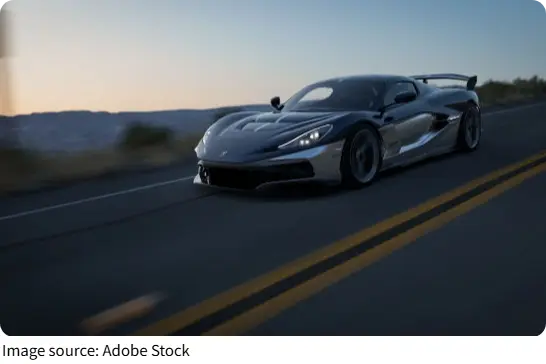
Centralized Mass and Polar Moment
The core advantage of a mid-engine layout is that it places the heaviest single component, the engine and transmission, near the center of the car. This centralization lowers the polar moment of inertia, meaning the car resists changing direction less than a front or rear engine vehicle. In simple terms, a mid-engine car can turn into a corner more eagerly and stabilize more quickly after a slide.
Compare a front-engine grand tourer like a classic Aston Martin with a mid-engine Ferrari. The Ferrari feels more nimble in chicanes because its mass is clustered around the middle. This is the same reason a figure skater spins faster with arms tucked in. The mid-engine layout tucks the mass inward.
Optimal Static Weight Balance
A well-designed mid-engine car achieves near-perfect 50:50 front to rear weight distribution when the driver is onboard. The engine sits between the axles, so neither end carries a disproportionate load. This balance is critical for predictable handling at the limit. Front-engine cars tend to understeer because the nose is heavy; rear-engine cars like the classic 911 oversteer abruptly because the tail is heavy.
Mid-engine cars split the difference, giving the driver a neutral platform that can be rotated with throttle or steering without sudden surprises. That is why most purpose-built race cars (from Formula 1 to GT prototypes) use this layout: it allows the chassis to respond linearly to inputs.
Traction Under Power
When a mid-engine car accelerates out of a corner, the weight of the engine sits directly above or just ahead of the driven rear wheels. This improves rear tire grip under power because the vertical load on those tires increases. Combined with the natural weight transfer to the rear during acceleration, the mid-engine car can put power down earlier and with less wheel spin.
Front-engine cars tend to lose rear grip under hard throttle because the heavy nose lifts the rear; rear-engine cars have too much weight over the back, making them prone to oversteer on corner entry. The mid-engine layout strikes a balance: enough rear weight for traction but not so much that it destabilizes the front.
Practical Limitations and Trade Offs
Of course, this layout is not without compromises. The engine occupies the space where rear seats would be, so mid-engine cars are strictly two-seaters. Access to the engine for maintenance is often difficult, and luggage space is minimal (sometimes just a front trunk).
Also, the driver sits far forward, which can reduce forward visibility. But for pure driving pleasure, these trade-offs are accepted. Engineers also have to manage cooling; the mid-engine location means radiators must be placed at the front with long coolant lines, adding weight and complexity. Modern cars manage this with careful ducting, but it remains a packaging challenge.
Braking and Stability
Because weight is evenly distributed, mid-engine cars also brake more consistently. Under hard braking, the weight shifts forward, but since the front already carries roughly half the static load, the front tires can handle the extra load without locking prematurely. Rear-engine cars risk rear wheel lift under heavy braking, leading to instability.
The mid-engine car remains planted, allowing shorter stopping distances and more confidence on track. This stability extends to high-speed turns: the car is less likely to swap ends when trail braking because the mass is not concentrated at one end.
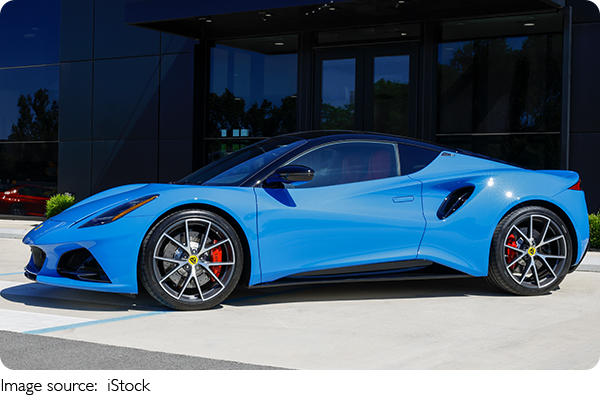
So next time you see a sleek mid-engine machine, you will understand the engineering behind its shape. It is not just about looking exotic; it is about placing every kilogram exactly where it helps the driver most. Whether you are a weekend track enthusiast or a fan from the stands, the layout tells a story of balance, control, and the pursuit of corner speed.
Ultimately, if you ever have the chance to drive one, you will understand why this configuration is adored by those who love to push the limits.